


Can AI Translation Be Low-Carbon Under ISO 14001
Data centres used about 415 terawatt-hours of electricity in 2024, roughly 1.5% of world supply, and the IEA expects that to more than double to around 945 TWh by 2030. AI is the main reason. Most of that AI power does not go into training the models. It goes into running them, the day-to-day inference that answers a prompt or translates a paragraph, which accounts for an estimated 80 to 90% of AI compute today.
Machine translation lives inside that number. Every time an LLM drafts a segment, a server somewhere draws power. So the honest question for any buyer weighing AI translation is not whether it uses energy. It does. The question is whether the provider can show where the electricity comes from and hold that claim up to an audit. ISO 14001 is how you check.
Where the power actually goes
Training a large model is a one-off spike. Inference is the running cost, and for a translation workflow it is the part that repeats millions of times. The IEA's Energy and AI report puts data-centre demand growth mostly on the AI side, with AI-focused facilities growing far faster than the rest.
Two things shape the footprint of an AI translation job. The first is how much compute the job actually needs, which depends on model size and how tightly the workflow constrains LLM translation. The second is what fuels the data centre. A model running on coal-heavy grid power and the same model running on renewables produce identical text and very different emissions. The text is not the variable. The electricity is.
What ISO 14001 asks of a translation company
ISO 14001 is the environmental management system standard, held by more than 670,000 organisations worldwide. The 2026 edition, published in April 2026, replaced the 2015 version and added climate change as a formal environmental aspect an organisation has to account for.
It does not certify a carbon number. It certifies a system: you identify your environmental aspects, set objectives, measure, and improve, on the Plan-Do-Check-Act loop familiar from ISO 9001 and ISO 27001. For a translation company the material aspect is electricity, because the linguists work on screens and the AI runs on servers. A provider certified to ISO 14001 has told an external auditor how it accounts for that power and what it does to cut it. A provider making a green claim with no management system behind it has told you nothing you can check.

Cutting the footprint at the source
The cleanest way to lower the emissions of AI translation is to change the electricity, not the output. AD VERBUM covers our full electricity use with a self-owned 1MW solar photovoltaic plant. That is generation we own, not renewable-energy certificates bought to offset consumption elsewhere. The distinction matters to any procurement team that has learned to read past a carbon badge.
Owned generation pairs with our ISO 14001 certification, so the environmental claim sits inside an audited management system rather than a marketing line. It also runs alongside the way we handle the AI itself. Our workflow constrains output with client Translation Memories and Term Bases and runs on right-sized, client-tuned open-weight models rather than the largest general model for every task. Less wasted compute is less wasted power.
Why procurement teams now ask
Environmental performance has moved from the CSR appendix into the scoring grid. Enterprise buyers increasingly include sustainability disclosures in vendor questionnaires, and public-sector tenders across the EU can weight environmental criteria in award decisions. If your translation supplier cannot answer the energy question, that is a gap in your own reporting.
There is a regulatory thread too. The EU AI Act (Regulation 2024/1689) pushes providers of general-purpose AI models toward documenting energy consumption, so the direction of travel is clear. AI energy use is becoming something you disclose, not something you hope no one asks about. Pairing that with ISO 42001 AI governance keeps the AI side auditable as well.
Before you accept a sustainability claim from any translation provider, four questions separate a real position from a green sticker:
Is the renewable power owned generation, or certificates bought to offset grid consumption somewhere else?
Is there an ISO 14001 certification behind the claim, audited externally, or just a statement on a web page?
Does the AI run on EU-hosted infrastructure where the energy source is known, or on public cloud with an unstated grid mix?
Is the AI workflow right-sized, constraining output with translation memory and appropriately scaled models, rather than running the biggest model for every segment?
We answer all four the same way, which is why we treat sustainability as a procurement argument rather than a disclaimer.
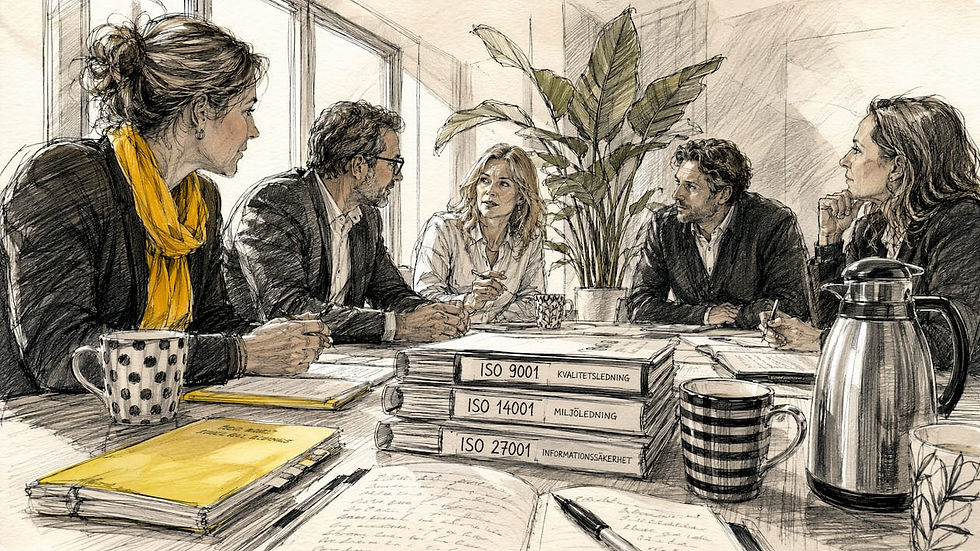
Our low-carbon translation services
Our translation services for regulated sectors run on ISO 27001 and ISO 42001 certified, EU-hosted infrastructure, with no reliance on public cloud tooling for core processing. Every project runs through our AI+HUMAN hybrid workflow: we ingest client Translation Memories and Term Bases first, our proprietary LLM-based LangOps System generates output constrained by client terminology on client-tuned open-weight models, and our certified subject-matter experts review for technical accuracy and regulatory compliance. Our QA is aligned to ISO 17100 and ISO 18587, with sector-specific requirements such as ISO 14001 environmental management backed by self-owned renewable generation applied where relevant. We serve Life Sciences, Legal, Finance, Defense, and Manufacturing clients across 150+ languages with 3,500+ subject-matter linguists. For teams managing audit-sensitive content, contact us to discuss your security and compliance requirements directly.
FAQ
Does AI translation have a large carbon footprint?
It depends on two things: the electricity source and the compute efficiency. The IEA reports data centres used about 415 TWh in 2024, on track to roughly double to 945 TWh by 2030, with inference dominating AI energy use. A job run on renewable power with a right-sized model carries a far smaller footprint than the same job on an unknown grid mix.
What does ISO 14001 certify for a translation company?
ISO 14001 certifies an environmental management system, not a single carbon figure. The organisation identifies its environmental aspects, mainly electricity for a translation company, then sets objectives and improves on a Plan-Do-Check-Act loop under external audit. The 2026 edition adds climate change as a formal aspect.
Is buying renewable-energy certificates the same as owning generation?
No. Certificates offset consumption by funding renewable capacity elsewhere, while owned generation feeds your own operations directly. AD VERBUM covers our full electricity use with a self-owned 1MW solar plant, which is a stronger claim than a certificate purchase and easier to defend in an audit.
Does the EU AI Act require energy disclosure?
The EU AI Act (Regulation 2024/1689) pushes providers of general-purpose AI models toward documenting energy consumption as part of their technical documentation. The wider direction is clear: AI energy use is becoming a disclosure item in both regulation and procurement.
Does low-carbon translation mean lower quality?
No. The electricity source does not change the text a model produces. Quality comes from constraining output with client terminology and certified subject-matter review under ISO 17100 and ISO 18587, which we run regardless of how the servers are powered.
How does ISO 14001 combine with data security here?
ISO 14001, ISO 27001 and ISO 42001 share the Annex SL management-system structure, so they run as one governance framework rather than three separate ones. EU-hosted infrastructure serves both goals at once: a known, renewable-backed energy source and controlled data residency.
